
In this post I will be beginning to bridge mental health and psychotherapy with political content. I will be sharing some of my own personal journey and perspectives here to illustrate my points. One of the reasons I am beginning to bridge these worlds is because I am seeing trends of cognitive distortions and logical fallacies being used in the larger conversations we have around politics and social issues. Obviously they are focused on quite a bit in both individual therapy as well as couples therapy, yet they are rarely called out in how we have larger conversations as a culture. For instance, it would be very difficult mischaracterize your husbands or your wife’s perspective in couples therapy; especially consistently (or in any close friendship or intimate relationship). Yet, mischaracterizations, straw man arguments, sensationalism, polarized thinking etc. happen consistently in media and political conversations. All of us have deep responsibility to learn, to grow and mature. That includes developing clearer thinking and a better capacity to connect with others about our deeply held opinions and biases. My hope is to shed some light on these issues in a way that inspires and challenges; in a way that will build bridges rather than burn them. It starts with us. So lets dive in…
What is Confirmation and Selection Bias?
Confirmation bias is our tendency to seek out information that makes us feel right and true and tune out anything that proves us wrong. Selection bias is how individuals, groups and media outlets decide which stories and facts to highlight versus which ones to leave out. Selection bias and confirmation bias go hand in hand. Together they decide what information you’re exposed to. They have the potential to limit or expand our palate.
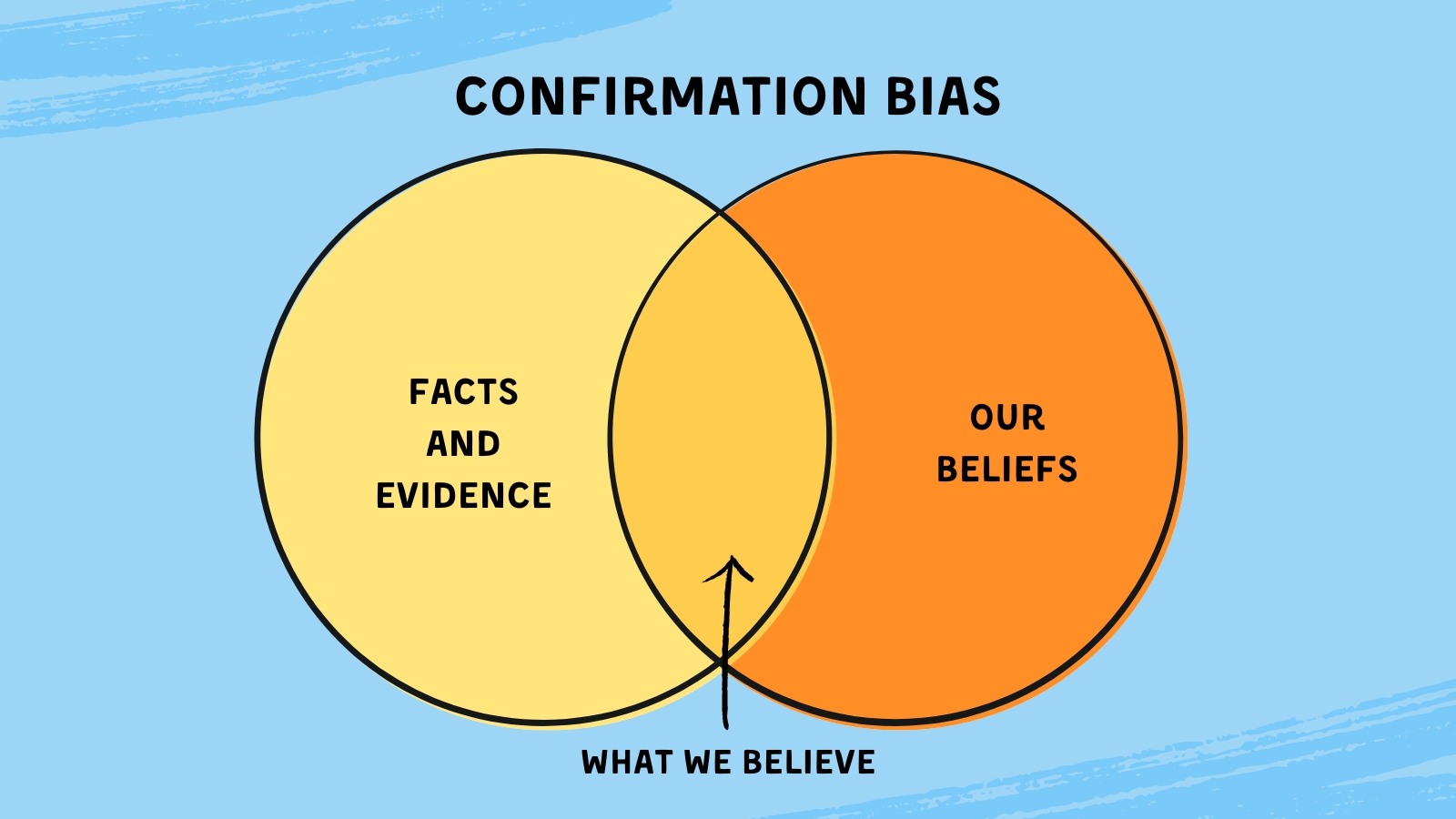
First it’s important to understand that these are inevitable. To understand more about why they are inevitable, I suggest you read Jonathan Haidt’s The Righteous Mind. I will be recommending his books over and over again in my writing. I can’t speak of his work and influence highly enough.
Let’s flush out a few ideas about why confirmation and selection bias are problematic when left unchecked.
First is the concept of Group Polarization. Group Polarization is a social psychology phenomenon where group discussion leads individuals to hold more extreme views than they did initially. This happens when members of a group, whether religious or political, are exposed to persuasive arguments that reinforce existing perspectives and attitudes rather than challenging them. What happens over time is that without challenge, existing opinions become more intense and rigid over time. This has been extensively tracked in both macro environments such as religious communities, nations, online communities and in micro environments such as jury deliberations. One way this happens is through the conscious control and censorship of information. For example, the censorship that happened during the Covid era on the internet and social media platforms.
How to Combat Group Polarization
To combat polarization, to combat confirmation and selection bias, it is fundamental to understand that other ideas/different ideas are not the enemy. The enemy is rather, isolation and myopia and of course, those pesky social media algorithms. I know this first hand from living in Boulder County for 20+ years. Boulder County is one of the most left-leaning counties in the United States (76.49% in the last presidential election). I was in that bubble, that echo chamber for decades. Being a lifelong liberal/democrat, my ideas were never challenged in Boulder. I was not exposed to the liberalistic challenge that I needed to continue to mature and evolve. My prejudices were only reinforced by the agreement with everyone around me. It wasn’t until I lived in Washington D.C. for a few years and actually had experiences at congressional hearings and speaking with Republican representatives that I slowly began to humanize the opposition let alone be open to having my mind and heart changed. It took years of being exposed to conservative thinkers through the internet and watching debates and lectures that I noticed my thinking becoming more dynamic and versatile. It took years of beginning to notice and understand the narcissism of the bubble that I was in being in the mental health field. Even then, it took even more years for me to question the righteousness of my democratic worldview and would even consider voting for or supporting a non-democrat politician. I would have never imagined the possibility of ever supporting a Republican candidate for anything from the local to federal levels. That’s how trapped in Group Polarization I was. We’re all (to an extent) a fish swimming in water not realizing we are wet. It’s just what we know.

It is my hope and prayer to seek understanding in addition to truth. Seeking understanding necessitates consistent exposure to all sides, especially ones contrary to your own. Politically that means liberals, leftists, libertarians, centrists, conservatives, christian conservatives etc. Religiously that means interfaith friendships, relationships and dialogue (Atheists, Christians, Jews, Secular-Humanists, Muslims, Hindus, Buddhists etc.).
The Information Diet
You can think of your exposure to this information as being similar to your diet. You want to feed your mind just as you want to feed your body. Intentionally! Sometimes it’s fine to have some Doritos, or a greasy hamburger, or some candy on Halloween. But this has to be balanced with intentionally nutritious food most of the time. Protein, fats, vegetables and fruits etc. The same applies to information, it’s fine to read some headlines that make fun of the opposing group. Maybe even some stories that sensationalize or polarize the information. That just feels good sometimes to rally for your team against the other side. It’s popcorn. We’re all human and we can enjoy that from time to time. But most of the time we need a balanced diet.

Again, I don’t want us to be solely in pursuit of accurate information. If that were the case, all our news outlets would be cold and rational conduits of information. It would not reflect the psychology, the hearts and minds of different people. I want us to learn how different groups/people/sides value different facts and fit them all together. This is the pursuit of understanding, empathy, nuance and wisdom. As such, our information diet should consist of liberal-leaning and conservative-leaning news sources, not just centrist and objective information sources. If you’re more liberally minded and consume CNN, MSNBC, NPR etc., then consider adding in some stories or subscriptions to more ‘center’ news outlets like The Christian Science Monitor or the Associated Press, as well as conservative leaning news sources like The Wall Street Journal, Bloomberg, The Daily Wire and Fox News. And vice versa. You want to humanize and understand other people. This is important not just because we all live in community but also because this will hone your own thinking and will promote the clearer expression of your own ideas.
Practical Tips
To fight confirmation bias and selection bias, we must allow ourselves to be changed by opposing and differing viewpoints. This is maturity and this is how you build wisdom. It takes courage, bravery and true vulnerability because it requires real change and transformation.
Beware of people, ideologies and philosophies that discourage engagement with other-ness. Beware people that encourage you to ostracize or not speak to family members or friends because of a political of social difference of opinion. I saw this extensively in the last election cycle, and no doubt you did too.
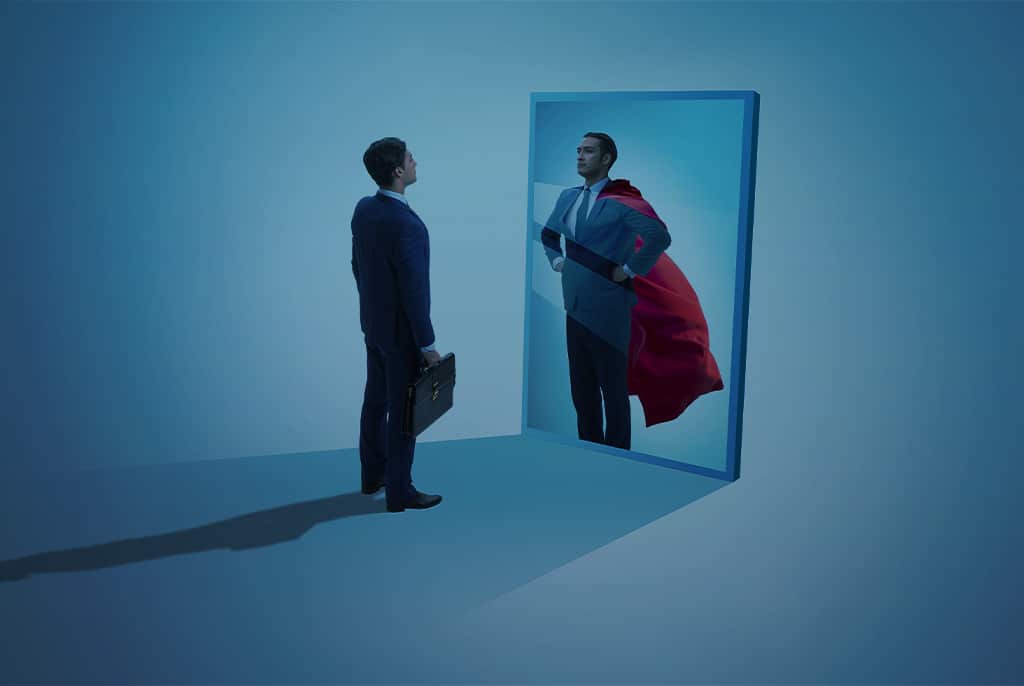
Most of all, beware your own arrogance. Be open to different ideas and viewpoints. Be open to having your mind and heart changed. Have the courage to evolve. We’re all self-righteous and we can all do better to keep it in check and exercise humility and have a spirit of learning.
In this way, I encourage classic liberalism. In my opinion, liberalism is the greatest achievement in the modern age. Let’s not let it go to waste by letting polarization divide and isolate us. Let’s build bridges not burn them. We’re all neighbors.
Here are a few practical tips to combat your own biases:
- Make an honest appraisal of the information you digest. Expand it.
- Can you make sound arguments both for your own biased viewpoints and sound arguments against them?
- What would the criticism of your viewpoint be? Can you formulate one? If you cannot, then you have a blind spot.
- What emotional tone does the media you consume have? Is it hopeful? Fearful? Righteous?
- Have curiosity as to whether your perspective was given to you (introjected) or is it an authentic opinion that you have actually worked for? Is it a mantra, a given opinion that you actually haven’t been thoughtful about or really grappled with? For example, one I held for a long time was in the framing of the abortion issue. I accepted the framing that abortion was a women’s health issue, a women’s reproductive issue. Simple as that. It’s their choice. Period. That framing is intellectually dishonest and in no way reflects the nuanced and highly complicated issue that abortion is.
Assess this honestly and start to question how you can begin to have a more balance information diet. Use AI for this purpose. Ask AI to summarize news stories or a piece of legislation. Have AI give you arguments for or against a particular issue or bill.