
Do this sound familiar to you?…
I have to just hold space. I’m supposed to be sweet, soft and compassionate. I’m supposed to be considerate. I’m supposed to recognize that the person attacking me is doing so out of their own pain, their own confusion, their own projections. I shouldn’t take it personally. I’m supposed to hold space for them. I’m supposed to be a mirror so that they can regulate themselves and see how their attack is unjustified. I should have compassion for their perspective. I should have compassion for the part of them that is confused and hurt. Let them express. Let them have their temper tantrum and take the high road.
It’s certainly sounds familiar to me. I’ve had this sentiment reflected back to me in the spiritual and psychotherapy communities time and time again. I’ve heard it from coaches, mentors and friends and I’ve seen it play out in our culture conservations all over the place.
And I call bullshit.
My stance is: if you’re being attacked then defend yourself. You’re attacking me and that is not ok. Simple.

But “defensiveness” has gotten a serious bad wrap. It gets apathologized more often than not. The sentiment is that if you’re being defensive then you must be conflict avoidant. If you’re being defensive then you must not want to take responsibility or accountability for yourself. You must not be self-reflective or capable of seeing the situation clearly. Why else would you be defensive?
I am tired of defensiveness being overly-pathologized and always seen as a negative.
I believe this phenomenon is a reflection of immaturity and a narcissistic character trait. Let me explain…Imagine you are getting attacked. You appropriately defend yourself. Now, the “attacker” has a number of options.
- They could recoil and retreat out of hurt that you are being defensive.
- They could start dissociating because they are actually quite conflict avoidant and don’t have a lot of psychological resilience.
- They could justify their own position because you’re being defensive and being defensive is bad.
I’ve seen all of these. I’ve experienced them firsthand in both professional and personal relationships. I’ve seen this play out in groups, where the group will suddenly come to aid of the attacker because they are dissociating. Rather than holding the attacker responsible for the attack, the group is now coddling them because they can’t handle conflict, because they can’t handle someone defending themselves and pushing back.

Firstly, I call this immature because it’s incredibly psychologically fragile. We want to be anti-fragile. We want to be strong. Resilient and capable of defending ourselves when it’s appropriate and necessary to do so.
I call this a narcissistic personality trait because narcissism does not like pushback. They do not engage in conflicts in good faith, they do not listen to reason, they do not understand anything but power and influence. Narcissism struggles with being held accountable. So to avoid accountability, they employ one of these strategies to keep the attention off of them, off of their misstep, off of their attack and onto the person being defensive. You’re being defensive so I am now in need of protection.
Remember, being defensive is bad.
So if I keep attention on the person being defensive, I can play the victim, be morally self righteous and avoid accountability. And it’s so easy for groups to fawn and coddle. In both spiritual and psychotherapy communities I have seen this sentiment expressed in a variety of ways. One of which is that that is the appropriate role of “masculine” energy. To just hold space and be a container for chaos. To let the energy just run without it knocking you over. Just take it. Sound familiar? This is a false role of masculinity: that defending yourself is wrong or bad because being defensive is bad. I believe this stems from a deep fear of conflict. Again…an immaturity that reflects narcissistic traits that we have yet to grow past as a culture.
Meanwhile, the person appropriately defending themselves is left in the dust.
It’s easy for this person to get overly neurotic trying to understand if they actually did something wrong. Was I being defensive in a bad way? Am I avoiding conflict? Am I avoiding accountability here? Was I supposed to allow this aggression to come at me? Was I supposed to be immaculately regulated and hold space for this person? It’s a confusing space to be in. It turns a very reasonable and simple impulse, to defend oneself, into a very confusing interpersonal or group dynamic that can be easily manipulated.
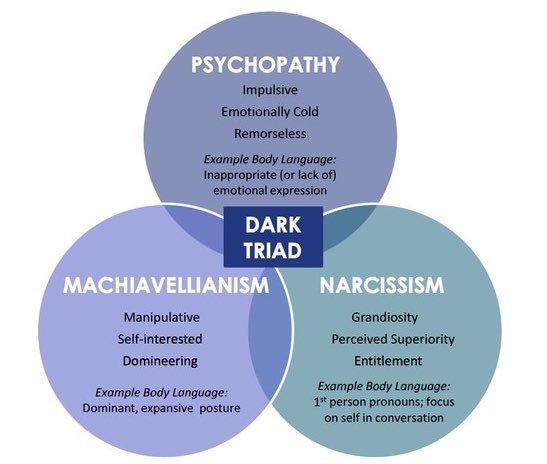
I’m reminded of how we as societies, villages, tribes and cultures have dealt with people who are narcissistic, psychopathic and machiavellian (especially aggressive manifestations). Those three traits are often referred to as “The Dark Triad”. Briefly…they are socially aversive personality traits that are characterized by interpersonal exploitation, low empathy and selfishness. People who embody them are typically charming and personable but are manipulative, entitled and potentially reckless. If you’re interested there is a lot more information on The Dark Triad all over the net. Back to the answer of the question. The way we deal with folks like this is with appropriate and controlled aggression. We do not fawn. In order to prevent an aggressive narcissist, we have to be aggressive and hold that behavior accountable in the moment. It requires aggression. Healthy aggression, healthy boundaries. Defending yourself is a healthy function that keeps immaturity and the dark triad at bay.
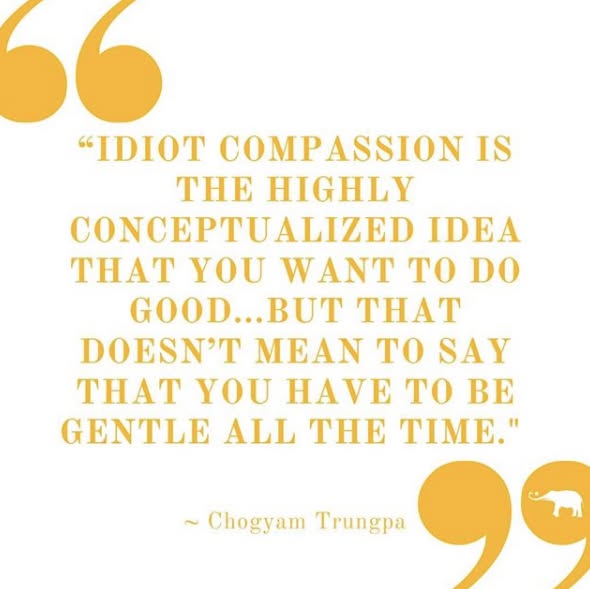
Here are a few examples of how you can enforce appropriate boundaries and defend yourself in the moment if you feel you’re being attacked.
“What you just did was inappropriate.”
“You’re acting out of line.”
“That wasn’t ok.”
“You’re attacking me…back off.”
This is a healthy and necessary mechanism…you will be attacked in your life, sometimes overtly and sometimes covertly. Wolves in sheep’s clothing. It takes experience and wisdom to be able to sniff it out and learn how to deal with it. That takes boundary enforcement. It takes being able to defend yourself in the face of being attacked.