

Straw man arguments are everywhere. They occur everyday in media, social media, debates, politics, in classrooms and within marriages. As such, this is probably the most important logical fallacy to understand and master.
A Straw Man Fallacy is: Instead of arguing the actual point, they argue with a weaker version of it.
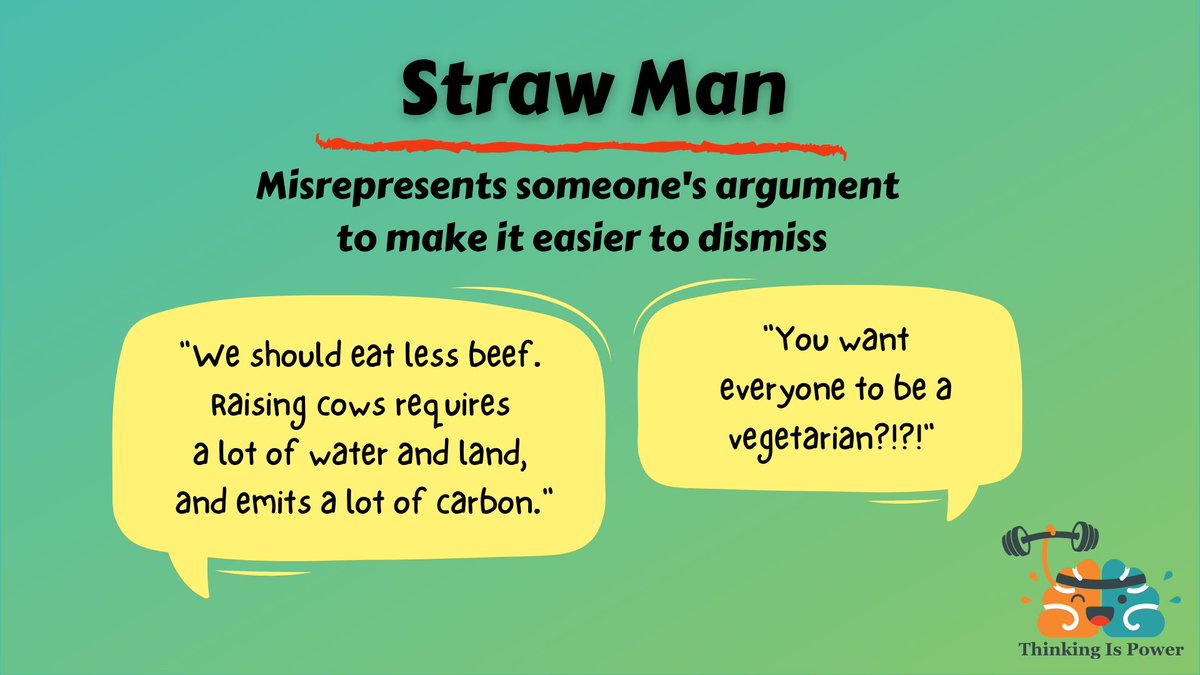
For example, Let’s imagine some friends in an argument. Imagine one friend is says: “We’ve been thinking that we should take our son out of that school because they are teaching LGBTQ content to kindergarteners and I think that’s inappropriate.” Now imagine their friend’s response is something like: “So you’re anti-LGBTQ?” Or “How can you be so bigoted?” Or “Are you just a full-blown conservative now?” Now if they were anti-LGBTQ, that would be an easier argument for them to contend with. If they were bigoted that would also be an easier argument to contend with. It would be easier for them to engage from a place of moral outrage and ethical appeal. But those responses do not actually engage with what they said. Straw Man does not contend with the actual argument. They over-simplify the argument so that it’s easier for them to argue with it. It leaves the other person being manipulated into a completely different conversation.
Straw man fallacies are effective in getting short-term validation. It feels good to get a “gotcha” moment. But that comes at the cost of integrity and self-respect because you’re not being honest. We can all feel those moments when we know we are straw manning. Our conscience knows when we’re doing the right thing and when we’re doing something for a quick moment of validation or dopamine hit at someone else’s expense. In the end, you pay for it with low self-esteem. Like a boxer who only spars with a bag or a dummy. You can brag about knocking out a punching bag but you haven’t proven anything about how you would fare in an actual fight. Straw Man appeals to quick, emotion-based reasoning. It degrades arguments and prevents them from being collaborative or productive. More importantly, straw manning destroys your ability to learn. You never have to upgrade your thinking while simultaneously feeling self-righteous and intellectually/morally superior. But that sense of superiority is fake and empty.
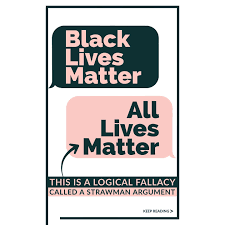
Stress testing an argument is necessary. Challenging someone’s ideology, opinion or perspective will necessarily help them to hone their thinking and present their argument in a more intelligent way the next time. This is how we grow and evolve, through struggle, connection and civil disagreement. Easy victories over straw scarecrows doesn’t earn you genuine respect or improve your skills.
This brings us to the antidote of Straw Man: Steel Man.
A Steel Man is a sincere effort to present the strongest possible version of the argument you’re trying to oppose. Not a weaker caricature. To Steel Man means three things:
- Accurately representing the opposing view without exaggerations or distortions.
- Highlight the strongest evidence in their favor. Not the weakest.
- Acknowledge their valid points even if you disagree with the overall conclusion.

I use this in my couples therapy sessions all the time. We all have the deep need to be seen, witnessed, and experienced in a way that is accurate. It feels good to be known by another. Especially your partner. Making sure that your partner is understood ON THEIR TERMS is paramount in a marriage. And it’s an essential tool in any effective relating. When they feel understood fully, then and only then do you continue.
Carl Rogers commented beautifully on allowing yourself as a psychotherapist to be changed by being in relationship with your clients. He defined “true listening” or “empathetic listening” as a “deep, nonjudgmental understanding of the other persons feelings and experiences.” He said, “If you do truly see it from the other persons way – deeply and intuitively – you might even find your own mind opening in response.” Empathy is thus an antidote to self-righteousness. It’s easier said than done of course. It’s very difficult to empathize across a moral divide or when you’re triggered and are having a strong emotional experience. It takes an enormous amount to courage to actually change your heart and mind about something that you find to be important. It takes courage to breathe, set your triggers and agenda aside in an argument to really listen.
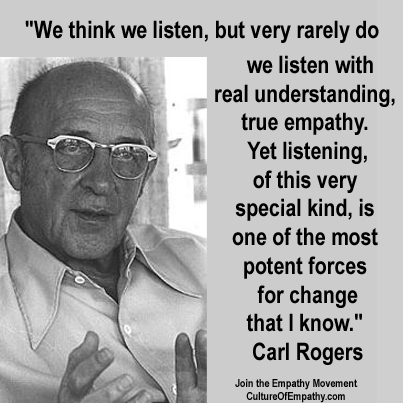
Empathetic listening in your marriage or even in a political debate will completely shift the texture of the engagement in a more positive and productive interaction. This is what can set you apart from others. Rogers thought this was key for emotional maturity and self-understanding. It necessarily entails being open, available and vulnerable. It entails allowing this person and their perspective and ideas to change you. And change is scary. Jordan Peterson spoke to this by saying: “I am willing to accept the consequences of my error, and that is different than being right.” It’s scary to admit that we might have been wrong about something, especially if it’s as important as something like a deeply important political or social issue like illegal immigration, abortion or foreign intervention.
Deeply listening requires us to do several things at once.
- Being with what someone is actually saying while keeping our own reactions, responses, quick comeback and triggers in check.
- Being humble enough to consider that there are merits in their view while simultaneously being open to the possibility that you might be partially wrong.
- Being empathetic enough to put yourself in their shoes and understand why they hold their position even if you disagree with it.
These are rare qualities. The person we are usually most interested in is ourselves. We are all self-righteous in this way. And this is what we are fighting against, our own arrogance, our own narcissism. If you want to win hearts and minds, you must not only be persuasive, but you must create positive experiences of interacting with you. You must earn respect. You must earn your confidence and competence. Winning an argument with a straw man is not a true victory. It’s fake. It’s unearned competence. Your competence must necessarily grow in conflict, challenge and being under stress. This is how we grow and earn self-confidence and respect. Steel Manning will get you there. Straw Man will not.

Imagine presidential debates for a moment. They’re pure chaos. They don’t engage with the other person’s points. There are straw man arguments flying all over the place. They talk past each other, not to each other. It’s combative, not cooperative. It’s no wonder people have lost faith and respect in politicians. And these are the models we have for adult, political discourse. It’s a tragedy. Imagine a politician who actually Steel Manned when they were in debates and interviews. That would truly stand out. It would immediately earn respect and begin to shift the norm and culture of how we engage with each other in either good faith or bad faith.
Practical Tips:
- To bring Jordan Peterson back yet again, in his wonderful book 12 Rules For Life, he has a rule dedicated to this. Chapter Nine is titled: “Assume that the person you are listening to might know something you don’t.” What wonderful advice! If you begin the conversation with that axiom then you’re starting from the vantage point of learning and collaborating. What does this person know that I do not? What can this person teach me? I highly suggest reading or listening to that chapter of his book.
- Have good eye contact when speaking. The intention is to humanize. Political partisanship and tribal thinking often encourages us to easily dehumanize other people. Again, we are combating our own self-righteousness. We all have the tendency to see others as less evolved, less intelligent etc. Instead, focus on the intelligent being in front of view. View them as intelligent, remind yourself that they have their own story, their own history, biases, prejudices, and unique life experience. Remind yourself that you’re sitting across from a peer. Keep your focus on the humanity of the person you’re speaking with.
- Be wary of online conflicts. Because of the lack of human connection online, psychopathic tendencies are encouraged. It’s easier to misrepresent each other’s views online, when you’re not looking at an actual human being. Hold yourselves to a higher standard when posting online or engaging in arguments online.
- When presented with a Straw Man, you can respond with “Hey, I think you misrepresented my point. Here is what I’m actually saying…” And then reiterate your point. You might have to do this multiple times. Have patience. Don’t let the Straw Man dictate the frame of the conversation.
Straw man fallacies are done in bad faith. Keep your standards high. Resist the temptation and engage with your friends, partners, political opponents in good faith.